
Abstract
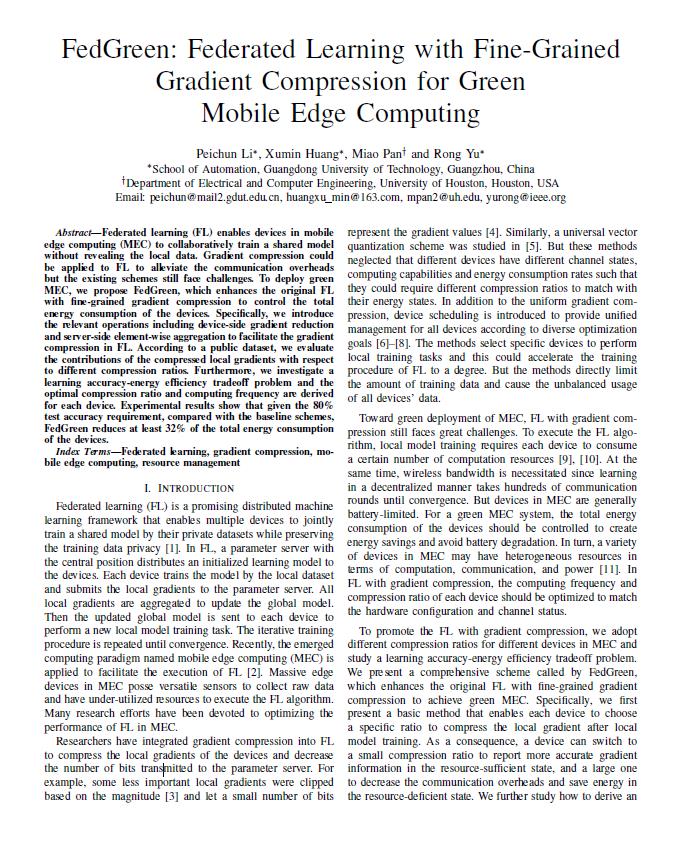
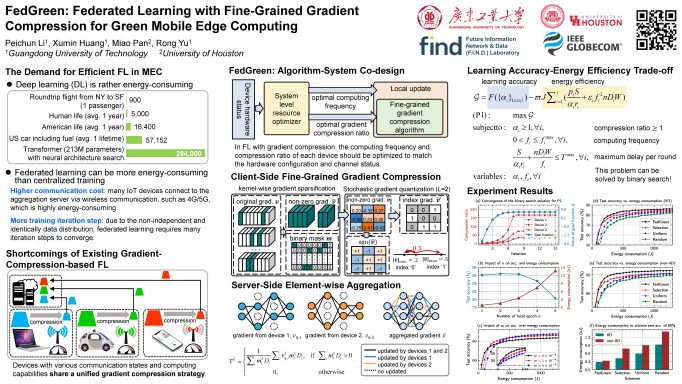
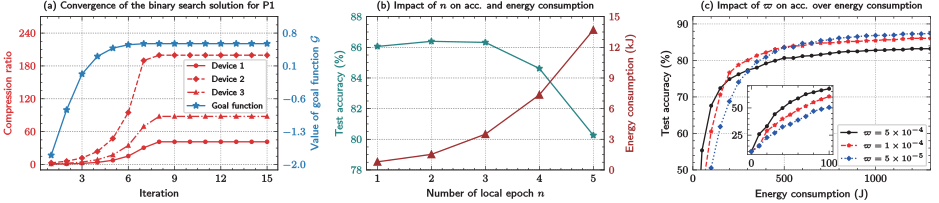
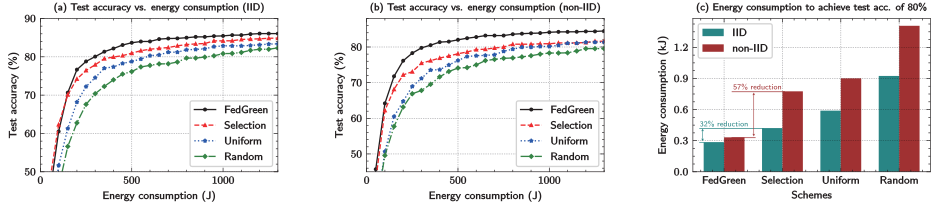
Federated learning (FL) enables devices in mobile edge computing (MEC) to collaboratively train a shared model without revealing the local data. Gradient compression could be applied to FL to alleviate the communication overheads but the existing schemes still face challenges. To deploy green MEC, we propose FedGreen, which enhances the original FL with fine-grained gradient compression to control the total energy consumption of the devices. Specifically, we introduce the relevant operations including device-side gradient reduction and server-side element-wise aggregation to facilitate the gradient compression in FL. According to a public dataset, we evaluate the contributions of the compressed local gradients with respect to different compression ratios. Furthermore, we investigate a learning accuracy-energy efficiency tradeoff problem and the optimal compression ratio and computing frequency are derived for each device. Experimental results show that given the 80% test accuracy requirement, compared with the baseline schemes, FedGreen reduces at least 32% of the total energy consumption of the devices.
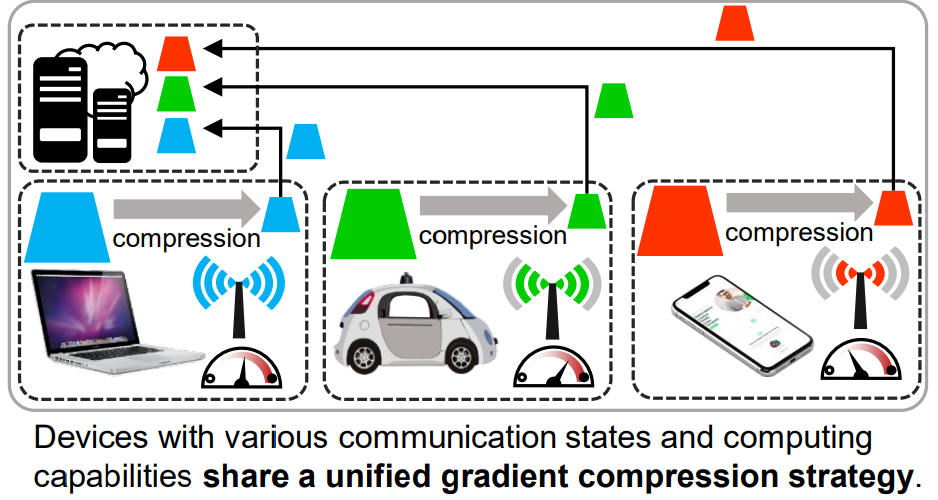
Shortcomings of Existing Gradient-Compression-based FL
FedGreen: Algorithm-System Co-design
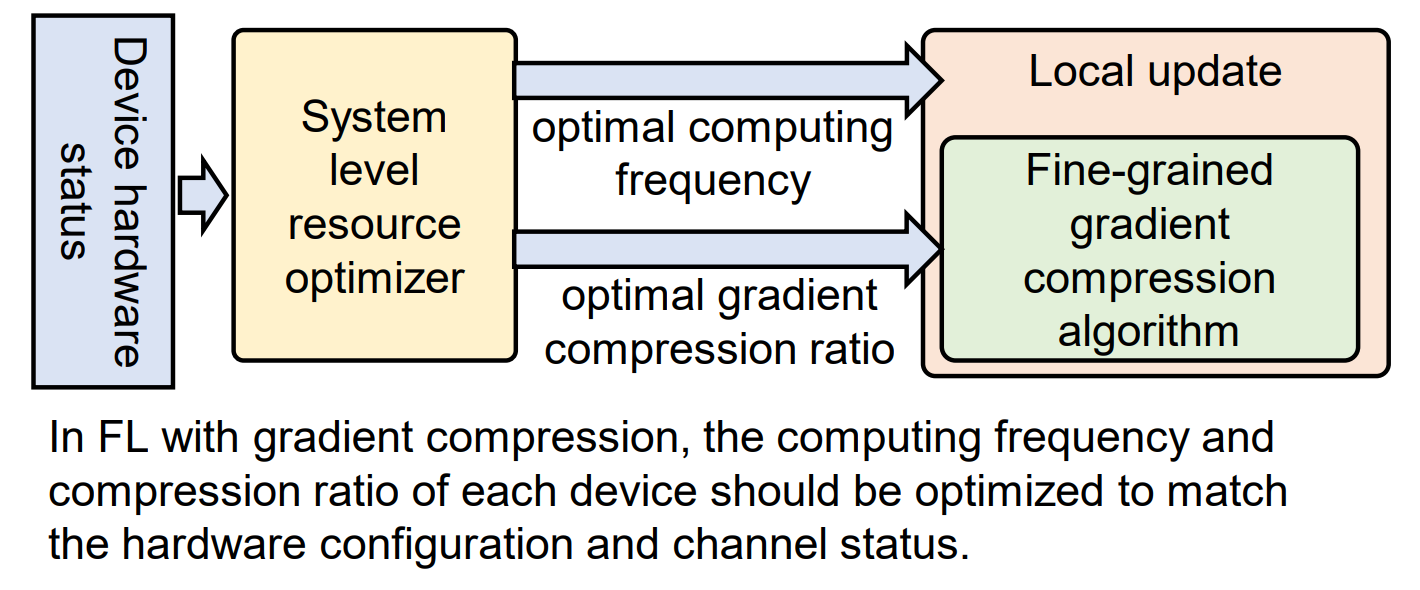
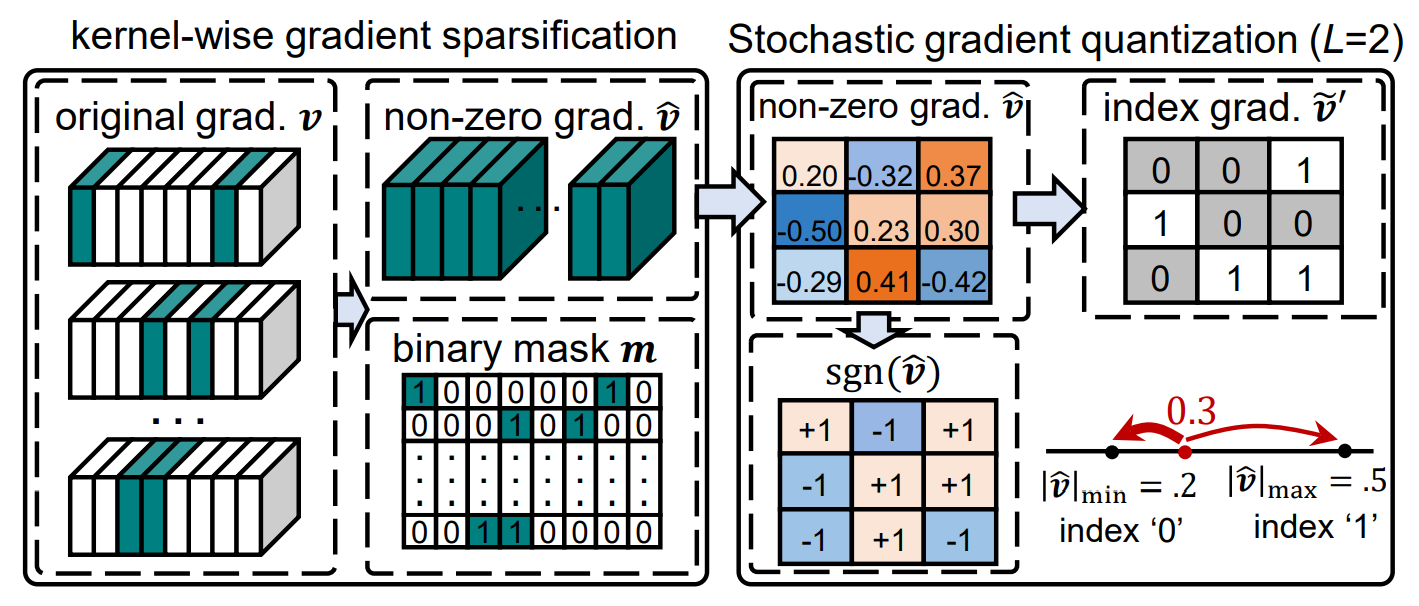
Client-Side Fine-Grained Gradient Compression
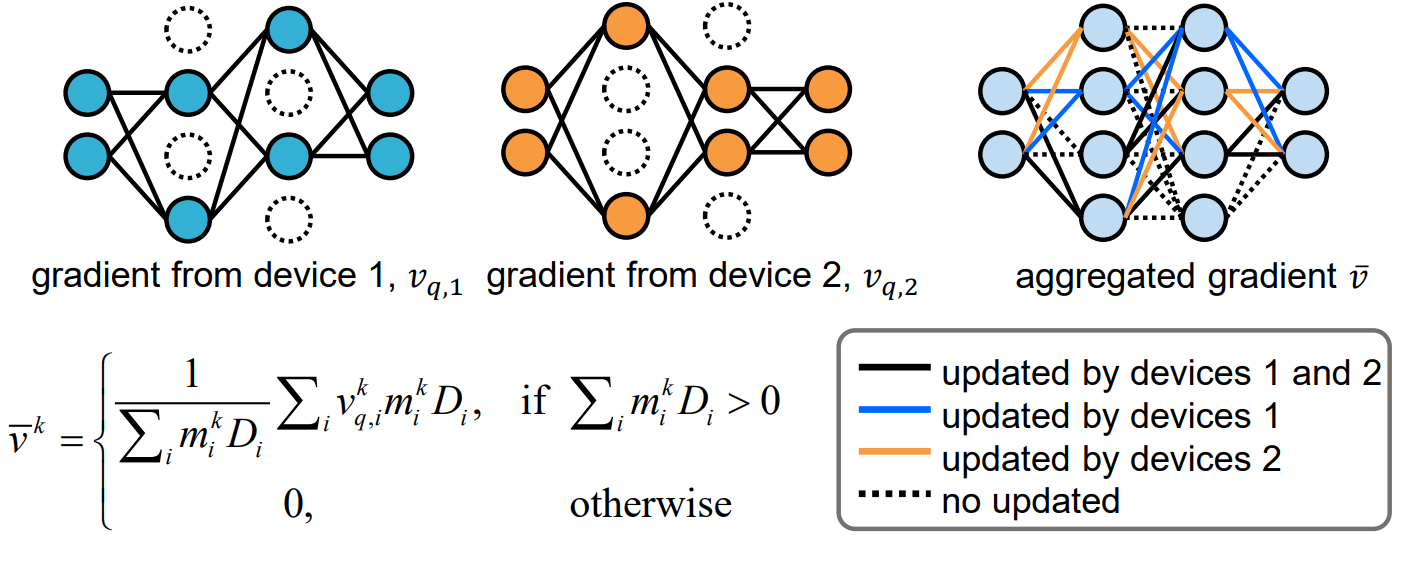
Server-Side Element-wise Aggregation
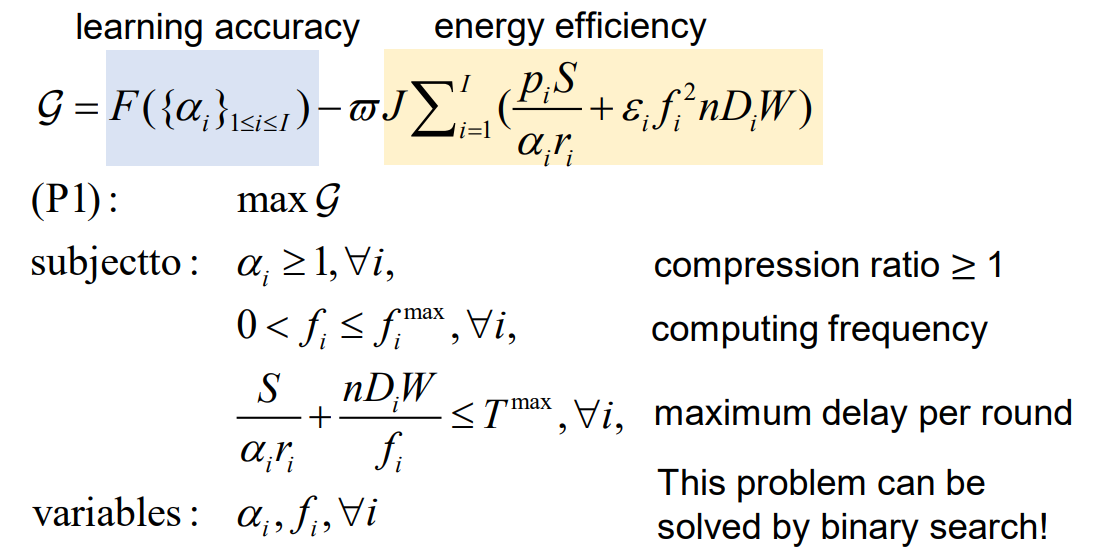
Learning Accuracy-Energy Efficiency Trade-off
Experimental Results
Citation
 @inproceedings{
  li2021fedg,
  title={FedGreen: Federated Learning with Fine-Grained Gradient Compression for Green Mobile Edge Computing},
  author={Li, Peichun and Huang, Xumin and Pan, Miao and Yu, Rong},
  booktitle={IEEE Global Communications Conference (GLOBECOM)},
  year={2021}
}
Tutorial (TBD)
Acknowledgments: The work is supported in part by National Natural Science Foundation of China (No. 61971148, No. 62001125), Guangxi Natural Science Foundation, China (No. 2018GXNSFDA281013), and Foundation for Science and Technology Project of Guilin City (No. 20190214-3). The work of M. Pan was supported in part by the U.S. National Science Foundation under grants CNS-1801925, CNS-2029569, and CNS 2107057.